A GLP-1 medication can change the number on a scale. That number is useful, but it is not the whole story.
Weight loss can include fat, water, and lean tissue. During a physician-guided plan, I look at the trend alongside strength, nutrition, activity, symptoms, medication tolerance, and the goals that matter to you. A home body-composition scale can add context, but it cannot diagnose a problem or replace a visit.
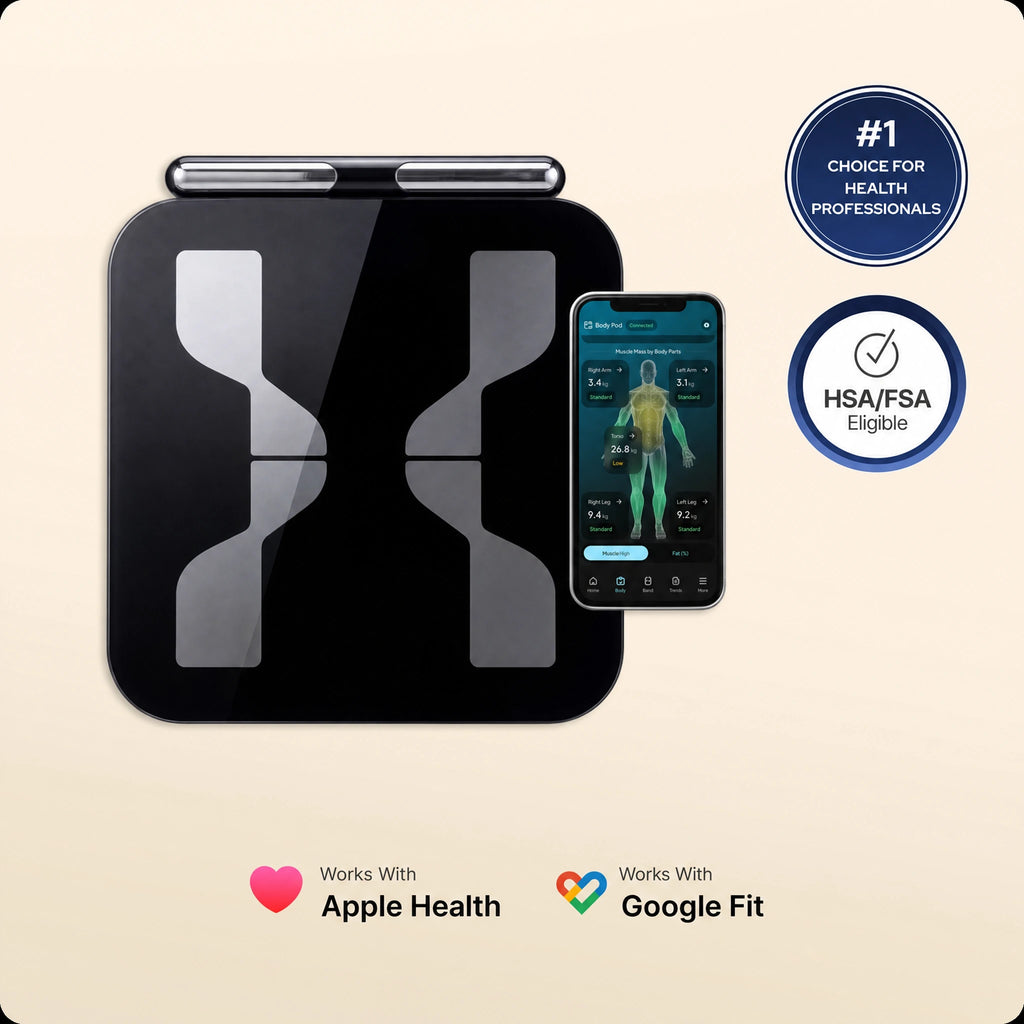
Interested in a home body-composition scale?
Shop the Hume Body Pod 2.0 through PeakLAB and use code PEAK at checkout.
Shop Hume Health with code PEAK →
Affiliate disclosure: PeakLAB may earn a commission if you purchase through this link. That does not change the price you pay. A Hume Body Pod 2.0 is optional and is not a substitute for medical care.
Key takeaways
- Scale weight cannot separate fat, lean tissue, and fluid.
- Home bioimpedance readings are most useful as a repeated trend under similar conditions.
- PeakLAB reviews useful home data during scheduled care, not in real time or for urgent concerns.
A scale cannot tell the whole story
A scale shows total weight, not what changed underneath it. In the SURMOUNT-1 DXA substudy, 160 adults taking tirzepatide lost an average of 21.3% of body weight over 72 weeks. About 75% of the lost weight was fat mass and 25% was lean mass. That is helpful context, not a prediction for any one person.
Lean mass is not the same as muscle alone. It also includes water and other fat-free tissue. The right response to a trend depends on your history, nutrition, resistance training, medication plan, symptoms, and rate of change. Learn how PeakLAB approaches medical weight management.
Use home readings as a trend, not a diagnosis
Home body-composition scales use bioelectrical impedance analysis, or BIA, to estimate body-fat percentage and lean mass. Readings can move with hydration, meals, recent exercise, alcohol, time of day, and the device's estimation method.
For a more useful trend, use the same device under similar conditions and look at several weeks rather than one reading. A home scale should not decide whether to start, stop, or change a medication on its own.
Where the Hume Body Pod 2.0 may fit
For people who want a home device, the Hume Body Pod 2.0 may be one option for collecting repeated measurements. Hume says its app can connect with Apple Health. Practice Better supports selected Apple Health information in client journals, but PeakLAB has not promised an automatic chart connection for any specific Hume measurement.
We will only describe a measurement as automatically available in your chart after that path has been tested and verified. If you already use Hume or another compatible device, bring the trend to your visit and we can decide whether it adds useful context.
How PeakLAB uses home data
At PeakLAB, a change in the trend starts a conversation. We may discuss your weight-loss pace, strength, food intake, activity, sleep, medication tolerance, or whether a dedicated follow-up would help. Home measurements are reviewed during scheduled care. They are not watched in real time and are not an emergency channel.
Considering a physician-guided GLP-1 plan? Book a free 15-minute discovery call to see whether PeakLAB is a fit.
Frequently asked questions
Can a home scale tell me whether I am losing muscle?
It can estimate a body-composition trend, but it cannot diagnose muscle loss or explain why a change occurred. It is one data point to discuss with your physician.
Does Hume automatically send every reading to PeakLAB?
Not as a public promise today. PeakLAB will verify the specific device-to-Apple-Health-to-Practice-Better path before describing an automatic chart connection.
Do I need a body-composition scale to work with PeakLAB?
No. It is optional. The right choice depends on your goals, comfort with technology, budget, and care plan.
Sources
- Look M, et al. Body composition changes during weight reduction with tirzepatide in the SURMOUNT-1 study of adults with obesity or overweight. Diabetes, Obesity and Metabolism. 2025.
- Dupertuis YM, et al. Bioelectrical impedance analysis instruments: how do they work? Current Opinion in Clinical Nutrition and Metabolic Care. 2025.
- Hume Health. The Hume Body Pod. Retrieved October 15, 2026.
- Practice Better. Apple Health + Practice Better. Retrieved October 15, 2026.